
Key takeaways
- An MR-Linac joins an MRI scanner to a radiotherapy machine, so your team can see the tumour while the treatment is being given.
- The real advantage is daily adaptation. Your plan is rebuilt to match your body on the day, not on the day you were scanned.
- It helps most with tumours that move as you breathe, or that sit very close to an organ that must be protected.
- Courses are often shorter, sometimes three to five sessions. But each session is longer, usually 45 to 90 minutes.
- Only a few UK centres have one. A new MR-Linac is planned for Leeds, expected to open in December 2026.
What is an MR Linac?
A radiotherapy machine is called a linear accelerator (or Linac). A standard radiotherapy machine uses CT-based imaging to ensure that treatment is delivered accurately. In comparison, an MR Linac combines a Linac and a Magnetic Resonance Imaging (MRI) scanner.
Unlike conventional radiotherapy, the MR Linac allows a radiotherapy team to:
- Visualise the tumour and surrounding organs in real time.
- Assess daily changes in the position, size or shape of the tumour or nearby organs
- Allows the radiotherapy treatment plan to be recalculated daily. This maximises the dose which can be delivered to the tumour and minimise dose to nearby organs.
- Monitor the tumour during radiation delivery.
This technology makes the MR Linac particularly useful for treating tumours which are:
- difficult to see on CT imaging
- lie close to critical organs
- move a lot with breathing or organ motion
- are in an area that has been treated with radiotherapy previously.
Some hospitals use an MR Linac to deliver courses of radiotherapy over several weeks. GenesisCare UK primarily uses the MR Linac to deliver short courses of stereotactic ablative radiotherapy (SABR), where its advanced capabilities can provide the greatest clinical benefit.
Using the technology offered by an MR Linac it has become possible to improve the quality of radiotherapy delivered to some patients, reduce the risks associated with treatment, and make treatments such as stereotactic radiotherapy (SABR) available to patients where previously this was not an option.
Not every cancer needs to be treated on an MRLinac. Some cancers can be treated equally effectively and safely, and more quickly, on a CT Linac. Not all Clinical Oncologists are trained to treat patients on an MR Linac. A doctor who is trained to treat patients on both types of radiotherapy machine will be able to advise which machine is best placed to treat a specific cancer.
Compared to a CT based Linac, MR Linacs are more expensive to purchase and running costs are higher. At the time of writing, treatment on an MR Linac is not routinely available to all patients on the NHS, and the increased costs associated with this technology are a barrier to this changing in the future.

Dr Peter Dickinson
Dr. Peter Dickinson is a Consultant Clinical Oncologist renowned for his specialized expertise in treating thoracic malignancies and complex metastatic diseases. Utilizing cutting-edge technologies like the MR Linac, he delivers highly precise Stereotactic Ablative Radiotherapy (SABR) that adapts to real-time tumor movements while protecting surrounding healthy tissue. Deeply committed to both clinical research and empathetic care, Dr. Dickinson meticulously tailors every treatment plan to ensure his patients clearly understand their diagnosis and receive the most advanced therapeutic options available.
How is treatment delivered on an MR linac?
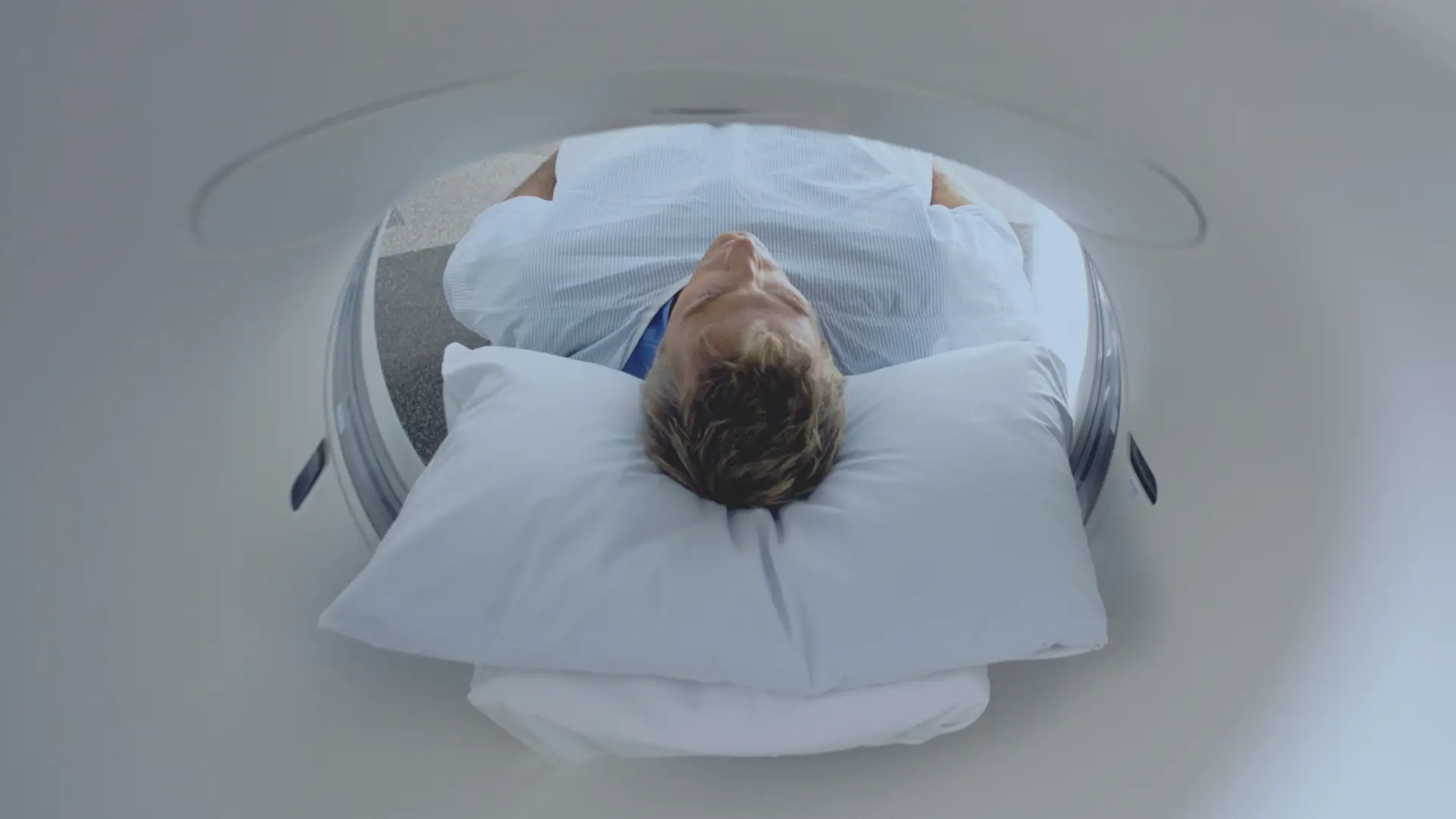
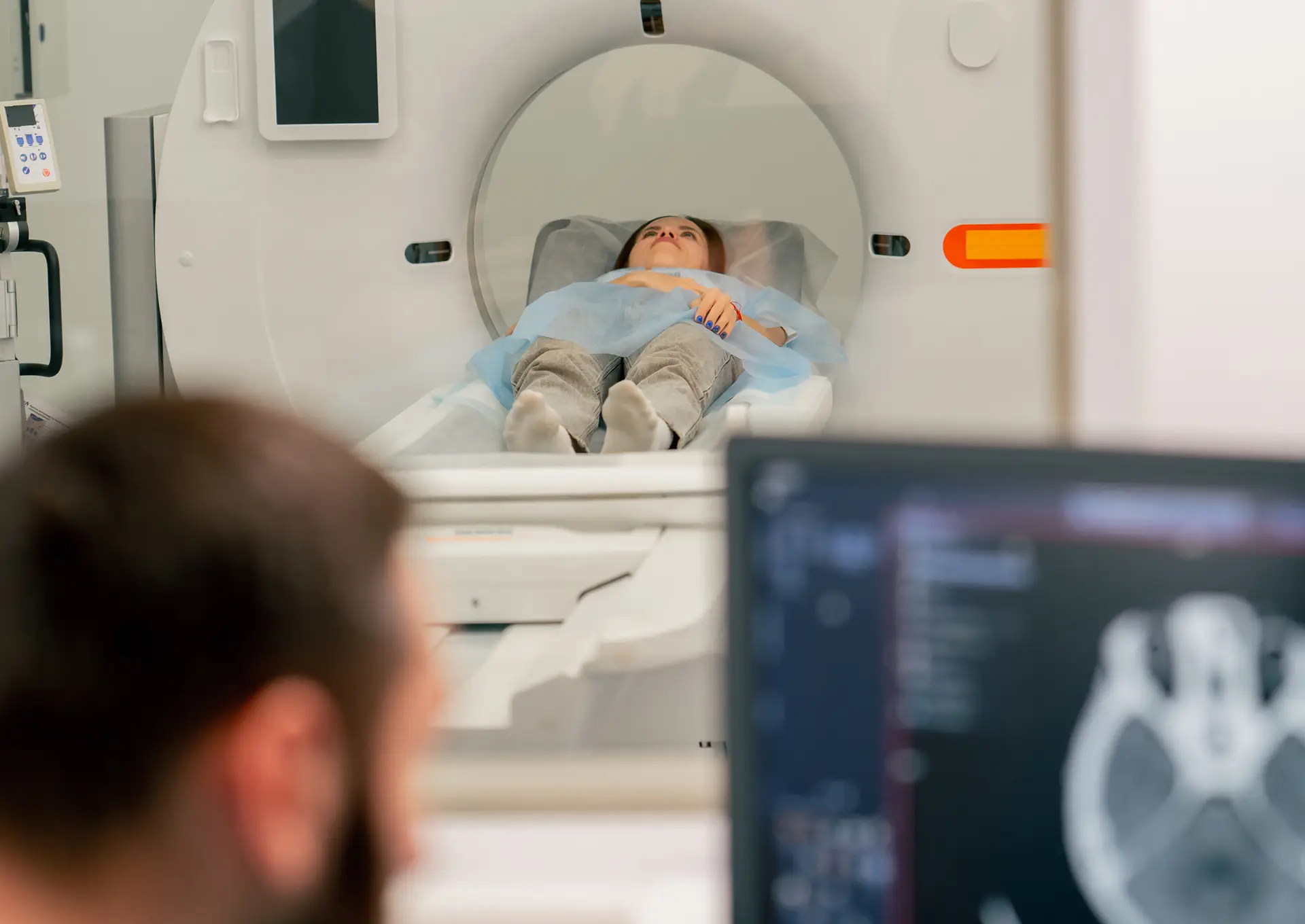
Before treatment begins, a personalised treatment plan needs to be prepared for a patient. Whilst patients have often already had many diagnostic scans, it is necessary to attend for dedicated radiotherapy planning scans. This usually involves a CT scan and a scan on the MR Linac. The MR Linac looks similar to an MRI scanner, and the patient lies in the tunnel whilst the scan is taken.
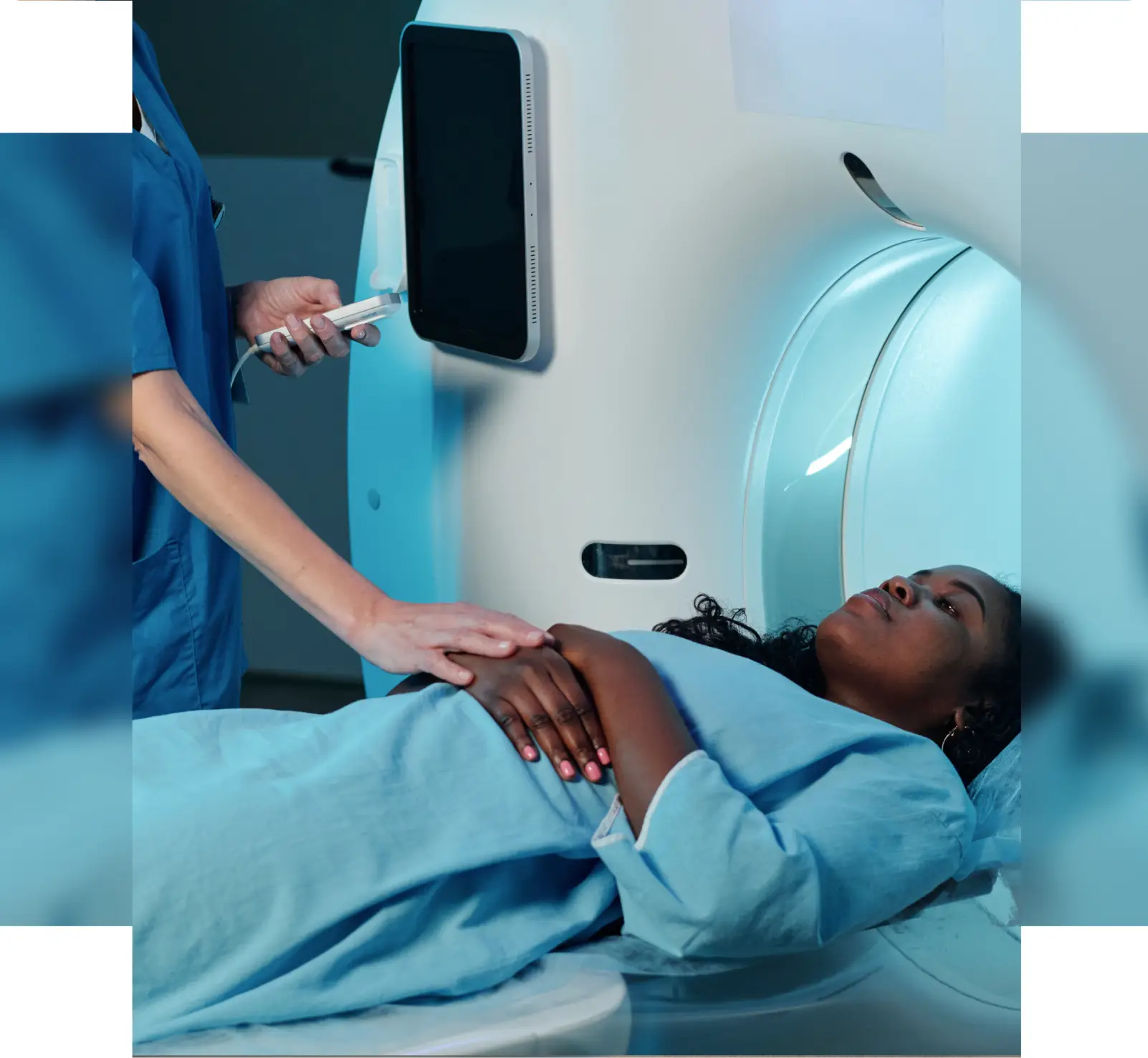
Just like for an MRI scan, it is important to ensure that a patient can safely be treated on an MR Linac. Before entering the treatment room patients will be asked a series of questions, such as whether they have a pacemaker, any other type of cardiac device, metal clips or implants from previous surgery. Patients will also be asked to remove items containing metals such as jewellery, watches, belts and hearing aids.
Treatment on the MR Linac is delivered as an outpatient. Each treatment session typically lasts 45 minutes and patients lie on their back in the MRI tunnel during treatment. MRI scanners can be noisy, so patients wear earplugs or headphones to reduce the noise. Patients can communicate with the staff during treatment and may be given a call bell to press if they need assistance. Depending on the cancer being treated, patients may be asked to follow breathing instructions during treatment. The patient does not feel anything when the machine is delivering radiotherapy.
Once treatment has been delivered, staff will help a patient out of the treatment room, and they can go straight home. Patients are not radioactive after treatment and do not need to isolate from children or other people. Patients who drive are often able to drive themselves to and from appointments. Stereotactic radiotherapy on the MR Linac is usually delivered on alternate working days. Patients are given appointments for all their treatment sessions before they start treatment.
What does the future hold of the MR Linac?
The MR Linac may already be one of the most advanced radiotherapy machines available, but further exciting developments are already in progress. Technical developments will reduce the time it takes to deliver treatment, and so the amount of time a patient needs to lie on the machine. There is also growing evidence that the MR Linac can be used to treat conditions which are not currently treated routinely on a radiotherapy machines, such as preventing irregular heart rhythms and treating pain by blocking nerves.
Wondering if this applies to you?
Whether MRI guidance would change your plan depends on your cancer type, where it sits and what treatment you have had already. You can send an enquiry to go through your scans and your options.
Summary
The MR Linac represents a significant advancement in radiotherapy technology. The MR Linac combines MR imaging and the ability to adapt the radiotherapy dose daily. This may improve tumour targeting, reduce the radiation dose to healthy tissues, and potentially improve treatment outcomes for selected patients.
Frequently asked questions
Is MR-Linac radiotherapy better than standard radiotherapy?
It is more precise, but precision only helps when there is something to gain from it. For tumours that move as you breathe, or that sit against a sensitive organ, it can allow tighter margins and a larger dose each session. For many other cancers, standard radiotherapy gives just as good a result.
How many MR-Linac sessions will I need?
Often three to five, and sometimes more. It depends on the type of cancer, its size and position, and any treatment you have had before. Prostate cancer is commonly treated in five sessions.
How long does each session take?
Most people are on the treatment couch for 45 to 90 minutes. Much of that is the team building and checking a new plan while you stay in position, rather than the beam being switched on.
Does MR-Linac treatment hurt?
You will not feel the radiation itself. The main discomfort is holding one position for a long time. The scanner is also noisy, so ear protection or music is usually offered.
Can I have MR-Linac treatment if I have a pacemaker or a metal implant?
It depends on the device. Some implants cannot go near an MRI scanner. Many modern ones can, with the right precautions. You will be screened before treatment is agreed, so bring the details of any device you have.
Is MR-Linac radiotherapy available on the NHS?
Yes, at a small number of centres including The Royal Marsden and The Christie, sometimes as part of a clinical trial. It is not available at every hospital, so ask your consultant whether a referral is possible for your cancer.